












Over the past few years, enterprise leadership has been subjected to an unrelenting chorus of hype: software startups declaring the total extinction of the sales representative, automated bots promising to close deals on autopilot, and algorithms claiming they can charm a chief financial officer into signing a six-figure contract without human intervention.
If you believe the venture-capital marketing decks, traditional business development is already dead.
The reality on the ground tells a fundamentally different story.
Most business leaders who rushed to adopt early automated sales tools ended up with one predictable outcome: an enormous spike in unread, generic outreach that torched their domain reputation and alienated prospective clients. Rather than making sales smoother, ill-conceived automation simply flooded corporate inboxes with synthetic spam.
Yet dismissing artificial intelligence outright as mere marketing vapour is just as dangerous.
The technology is fundamentally reshaping commercial sales, but not in the way the evangelists promised. It is not replacing the art of the deal. Instead, it is acting as a brutal separator between high-volume operational grind and high-stakes human negotiation.
Where AI Fails Miserably: Nuance, Trust, and High-Ticket Risk
To understand the real impact of modern technology on commercial pipelines, you must look at what actually drives an enterprise purchase.
Nobody signs a significant five- or six-figure contract because an automated message had flawless grammar. In B2B commerce, contracts are signed because a human buyer trusts that the vendor will not embarrass them internally. The buyer is putting their personal reputation, their departmental budget, and potentially their career on the line.
An algorithm cannot look a board of directors in the eye, read shifting body language across a conference table, or navigate the complex office politics of competing internal stakeholders.
When a deal enters the sensitive phases—custom scope negotiation, commercial risk allocation, legal pushback, and bespoke fee structures—synthetic tools collapse. Trying to replace a seasoned, battle-hardened commercial negotiator with an automated script at the closing table is corporate suicide.
Human empathy, strategic intuition, and consultative rapport remain completely insulated from automation.
Where AI Is Genuinely Devastating the Competition: The Operational Trench
Where artificial intelligence is radically transforming the landscape is on the front line: the tedious, resource-draining administrative grind that historically consumed 80% of a sales representative’s working week.
Historically, running an outbound or inbound sales floor meant paying skilled professionals to perform mind-numbing repetitive tasks: dialing disconnected numbers, leaving identical voicemails, manually typing notes into a database, and disqualifying prospects who could never afford the service.
That operational inefficiency is where technology is delivering genuine, undeniable results:
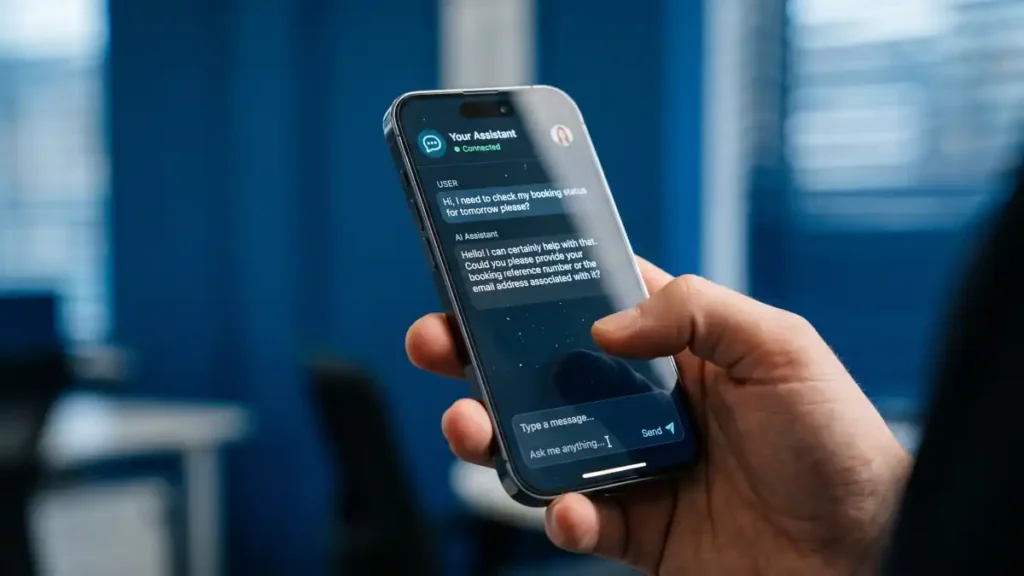
- Instantaneous Inbound Qualification: When a commercial prospect submits an enquiry, their buying intent decays with every passing minute. Modern, hyper-realistic voice agents can dial that inbound lead in under thirty seconds, hold a fluid, natural conversation, assess budget and timeline, and book a confirmed calendar meeting for a human closer while the interest is red-hot.
- Mass Triage Without the Headcount: Autonomous voice systems can execute thousands of simultaneous outbound qualification calls to verify data, navigate switchboards, and identify active decision-makers. They do not get tired, they do not suffer call reluctance, and they do not demand commission for booking an appointment.
- Automated Operational Hygiene: Removing the friction of manual data entry by automatically summarising call transcripts, mapping sentiment, and updating deal stages across internal systems without human error.
The Winning Model: The Hybrid Revenue Engine
The debate over “AI versus Humans” in sales is fundamentally the wrong conversation. The firms dominating their sectors today are not firing their sales teams to rely on chatbots; nor are they stubbornly forcing human reps to cold-dial phone directories with pen and paper.
The breakthrough lies in engineering a hybrid sales machine.
In this architecture, autonomous technology acts as the tireless operational vanguard. It sweeps the market, handles the high-volume triage, qualifies inbound interest within seconds, and manages calendar logistics 24 hours a day, 7 days a week.
The moment a genuine, qualified commercial opportunity emerges, the technology steps aside. The conversation transfers seamlessly to an experienced human closer whose sole focus is diagnosing the client’s strategic problem, crafting bespoke value, and negotiating the final agreement.