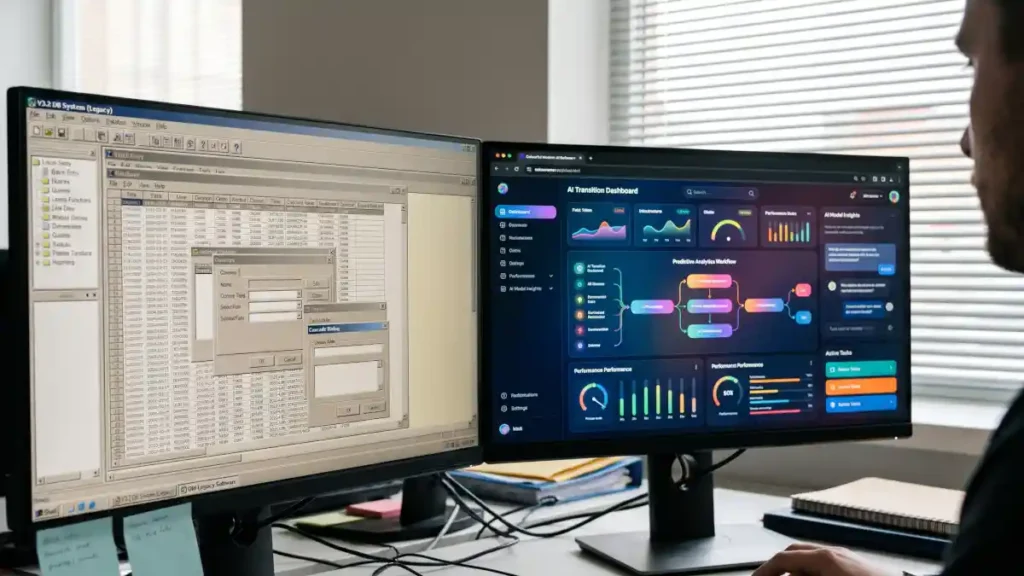












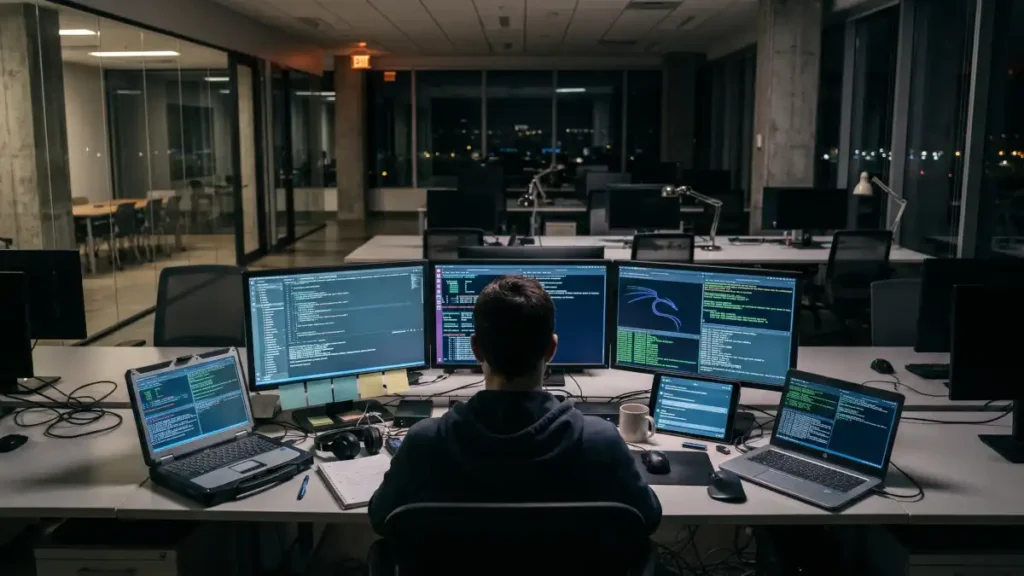
Operating within the Isle of Man provides considerable commercial advantages. The Island pairs a globally respected regulatory framework with a sophisticated financial ecosystem, an established e-gaming sector, and exceptional digital infrastructure. Yet that very concentration of capital, international client data, and cross-border transactions makes local enterprises an exceptionally attractive target for coordinated cyber threats.
For years, the standard approach across many boardrooms was passive. Management purchased off-the-shelf endpoint security, backed up files to an attached storage drive on Friday afternoons, and assumed the infrastructure was sound.
In modern commercial operations, that assumption is a liability. Ransomware operators deliberately seek out and encrypt secondary backups first. Public-facing systems are systematically probed within minutes of new vulnerabilities becoming public knowledge. When a critical database corrupts or a primary connection drops, goodwill and good intentions do not restore operations.
For non-technical directors, navigating this environment does not require learning technical jargon. It requires understanding where commercial liability lives and ensuring the business rests on three distinct pillars: penetration testing, orchestrated disaster recovery, and secure sovereign hosting.
1. Penetration Testing: Exposing Structural Weakness Before an Intruder Does
Many organisations believe they are safe because their internal IT team runs an automated scan each month. An automated scanner is useful hygiene, but it is little more than a checklist. It flags known out-of-date software, yet it remains blind to logic flaws, poorly managed user privileges, and the creative routes an actual attacker uses to move through a company’s systems.
Penetration testing is an offensive exercise. It involves authorising ethical specialists to scrutinise the network, challenge external firewalls, and attempt to access confidential data using the same tradecraft deployed by real threat actors.
In practice across the Island, significant breaches rarely stem from exotic, sophisticated exploits. They occur because of mundane administrative blind spots: an overlooked remote access portal left active after an office relocation, an administrative account using weak credentials, or an internal network that assumes anyone logged in via office Wi-Fi can be trusted unconditionally.
Whether reporting to the Isle of Man Financial Services Authority, satisfying underwriters for cyber insurance renewal, or protecting client assets, independent penetration testing provides definitive proof of whether your perimeter holds up under pressure.
2. Disaster Recovery: Backups Are Pointless Without an Engine That Runs
Almost every business leader asserts that their organisation has backups. However, possessing raw data is entirely different from having an operational business. Storing files in a secondary repository is useful, but if the underlying server hardware is rendered inoperable, reconstructing those files into live, searchable software can take days or weeks.
True disaster recovery is not a static archive; it is an active, rehearsed process. It is the measured procedure of bringing staff, core databases, and billing platforms back to life after catastrophic hardware failure, operator error, or a ransomware attack.
The viability of any recovery plan comes down to two specific measurements: how much data the business can afford to lose between backups, and how many hours the organisation can survive with its doors closed while engineers rebuild the system. Traditional daily backups often mean losing sixteen hours of transactions and spending days waiting for cloud archives to download.
Modern disaster recovery solves this through immutable snapshots. These copies are written to storage in a manner that prevents them from being modified, overwritten, or encrypted by external malware. Even if a local network is breached, the fallback system remains intact, allowing standby virtual servers to spin up rapidly and maintain continuity.
3. Sovereign Hosting: Retaining Control of Critical Architecture
The decision of where core applications and databases physically reside is too often dismissed as a minor commodity choice. The reality is that routing enterprise systems through overseas public cloud services introduces latency, external governance issues, and unnecessary exposure to foreign jurisdictions under data protection legislation.
Proper corporate hosting requires infrastructure built for stability rather than density. While low-cost commodity providers routinely crowd hundreds of organisations onto shared server instances, enterprise-grade architecture isolates computing resources to ensure consistent performance.
By housing systems within high-availability environments that offer dual-site redundancy, the organisation ensures that if power or connectivity fails in one location, a secondary environment resumes operations immediately without human panic. Physical proximity, known data jurisdiction, and dedicated architecture are the foundations of true system uptime.
The Unified Approach: Eliminating Vendor Fragmentation
Operational resilience rarely fails in the middle of a well-defined process; it fails in the gaps between disconnected suppliers. When a firm contracts hosting from one provider, engages an ad-hoc security consultancy from the UK, and relies on an internal administrator to manage manual backups, accountability dissolves the moment an incident occurs.
GODDRA was structured to resolve that disconnect for Isle of Man enterprises. By aligning offensive penetration testing, engineered disaster recovery, and resilient local infrastructure under a single operational standard, critical systems are defended proactively rather than repaired apologetically after an outage.
In business, stability is not an accident of good fortune. It is the natural consequence of rigorous preparation, resilient systems, and an refusal to leave business continuity to chance.